
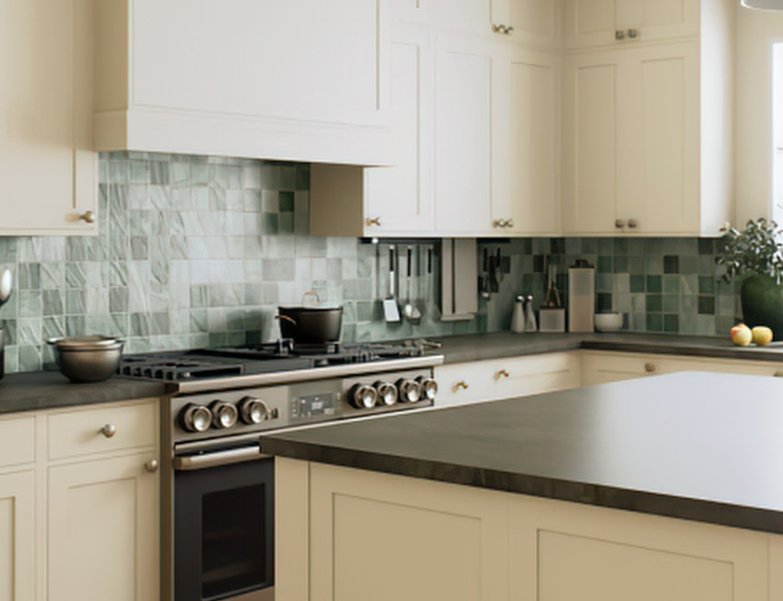
Plywood is often a strong choice for cabinet boxes and shelves, while MDF works particularly well for smooth painted doors and decorative panels. Neither material is automatically best for every component. Grade, thickness, joinery, edge protection, hardware, and installation all influence the finished cabinet’s performance.
For a November or December kitchen project, compare complete cabinet specifications rather than choosing solely by material name. A combination of materials can provide better value than paying for one material throughout without considering each component’s function.
What Are Plywood Cabinets?
Plywood consists of thin wood veneers bonded together, usually with alternating grain directions. This layered construction provides useful strength and dimensional stability.
Plywood cabinets commonly use plywood for boxes, shelves, or backs. However, the doors and drawer fronts may use different materials.
Ask which components are plywood, what thicknesses are supplied, and how exposed edges are finished. The label “plywood cabinets” does not describe every part of the assembly or guarantee identical quality between products. Request written specifications before comparing quotations.
What Is MDF Used For?
Medium-density fibreboard, or MDF, is made from wood fibres bonded into dense panels. Its uniform surface has no visible wood grain, making it useful for painted finishes.
Common applications include:
-
Painted cabinet doors.
-
Drawer fronts.
-
Decorative end panels.
-
Routed door profiles.
-
Substrates for certain applied finishes.
MDF is not the same as particleboard. Both are engineered wood products, but their composition and characteristics differ. Ask for the actual substrate rather than relying on broad descriptions such as “composite wood.”
Which Material Handles Moisture Better?
Suitable plywood generally tolerates occasional moisture exposure better than standard MDF, but neither should be treated as waterproof kitchen cabinetry.
Exposed MDF edges can absorb water and swell. Moisture-resistant MDF offers improved performance in appropriate applications, but it still needs suitable finishing and protection. Plywood can also suffer damage from prolonged wetting or unsuitable construction.
Pay particular attention beneath sinks, around dishwashers, and near damaged countertop seals. Prompt leak repairs and intact finishes matter regardless of the cabinet material. Do not select either product as a substitute for correcting ongoing moisture problems.
Which Provides the Better Finish?
MDF is often preferred for painted doors because its smooth, consistent surface avoids visible wood grain. Routed profiles can also produce a clean, uniform appearance when properly manufactured and finished.
Plywood can provide an attractive wood-veneer finish, but its exposed edges generally require treatment. Painted results depend on veneer quality and surface preparation.
Choose a finish for your kitchen’s appearance and maintenance needs. Inspect samples under your lighting, and ask how edges, corners, and frequently handled areas are protected.
Which Offers Better Strength and Value?
Plywood is useful where rigidity and reliable fastening are priorities. MDF is denser and heavier, so component dimensions, support, and appropriate fasteners deserve attention.
Compare these details before ordering:
-
Cabinet-box and shelf thickness.
-
Back-panel construction.
-
Joint design and assembly.
-
Hinge and drawer-slide quality.
-
Edge sealing and finish coverage.
-
Installation scope and warranty.
Price depends on grade, finish, construction, and supplier—not merely the material name. A premium substrate cannot compensate for weak joints, inadequate support, or poor installation. Assess the complete cabinet rather than choosing from a single specification.
Compare Cabinet Choices With Discount Kitchens
Contact Discount Kitchens to compare cabinetry based on construction, finish, hardware, and budget rather than material labels alone. Explore available door styles and configurations, and ask which substrates are used in your preferred cabinet range. Reviewing those details before ordering helps you choose a coordinated kitchen that looks right and functions reliably. Discuss your storage priorities, renovation plans, and spending limits so your investment focuses on features you will use every day.
