
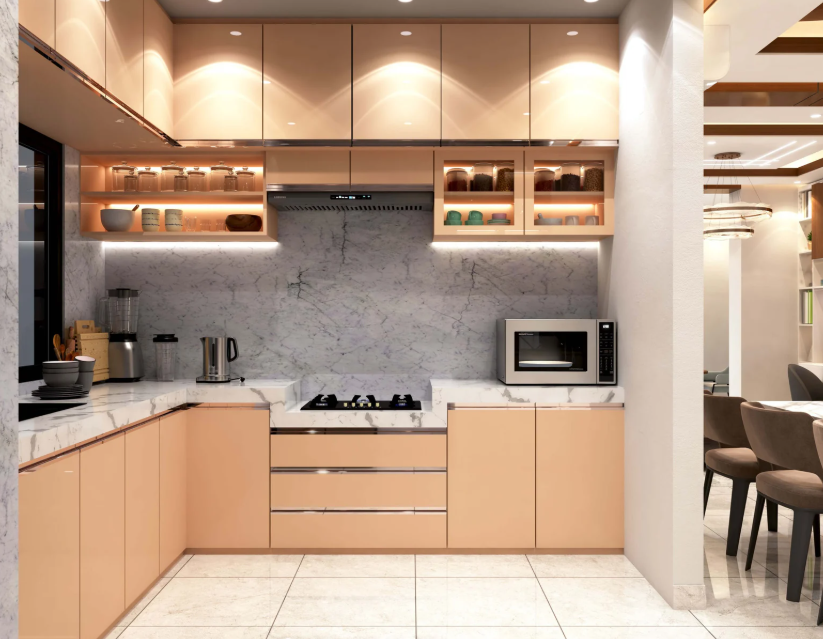
You can often install concealed hinges for older kitchen cabinets, provided the doors and cabinet frames can accommodate the correct hardware. Before refreshing your kitchen for holiday entertaining, check the door thickness, hinge mounting space, and cabinet condition rather than assuming hidden hinges are a direct replacement.
Key Takeaways
-
Existing doors may accept concealed hinges if their thickness, profile, and condition suit the selected hardware.
-
Face-frame and frameless cabinets require compatible hinges and mounting arrangements.
-
Many concealed hinges need a recessed cup hole drilled into the back of the door.
-
Soft-close functionality is a separate feature, not something every hidden hinge includes.
-
Test one door before modifying the entire kitchen.
What Determines Whether Hidden Hinges Will Fit?
Start with the cabinet construction. A face-frame cabinet has a framework attached across the front of the cabinet box. A frameless cabinet provides access directly through the box opening.
Both can use concealed hinges, but the mounting hardware is not necessarily interchangeable.
Next, identify the door position:
-
Overlay doors cover some or all of the cabinet’s front edge.
-
Inset doors sit within the opening.
-
Lipped or rebated doors have a stepped edge that may require specialist hardware.
The door overlay—how far the door extends beyond the opening—helps determine which hinge and mounting plate combination will work.
Do Existing Doors Need New Holes?
Often, yes. Many European-style concealed hinges use a circular cup recessed into the back of the door.
A common cup diameter is 35 mm, approximately 1⅜ inches, but drilling depth and edge position depend on the exact hinge. Do not use generic measurements in place of the manufacturer’s instructions.
Before drilling, check:
-
Door thickness at the proposed cup position
-
Available material around raised or recessed panels
-
Existing screw holes and previous repairs
-
Clearance between the hinge and internal shelves
-
Whether the mounting screws will hold securely
A door can look substantial from the front while having insufficient material where the hinge cup needs to sit.
Can Hidden Hinges Fix Sagging Cabinet Doors?
They may help with alignment, but they cannot correct every underlying problem.
Adjustable concealed hinges allow controlled changes to the door position. However, a warped door, loose cabinet box, or deteriorated screw fixing needs attention first.
Fitting new hardware to damaged material can produce a short-lived improvement. Inspect both the door and cabinet mounting points before deciding the upgrade is worthwhile.
Can You Add Soft-Close at the Same Time?
Yes, if compatible soft-close hinges are available for the application.
Concealed describes where the hinge sits; soft-close describes how the door closes. A hidden hinge does not automatically include damping.
Ask whether the proposed hardware provides:
-
Built-in or add-on damping
-
Appropriate support for the door’s size and weight
-
Sufficient opening clearance
-
Adjustment access after installation
-
Available replacement components
Follow the manufacturer’s guidance on hinge quantity rather than automatically reusing the original number.
Will the Old Hinge Marks Remain Visible?
Possibly. Removing exposed hinges can reveal screw holes, finish differences, or impressions on the door and frame.
Include filling and refinishing in the project scope. An older finish may be difficult to match, so the cosmetic work can matter as much as the new hardware.
For a November or December update, complete one trial door first. This helps establish the finished appearance and avoids dismantling the kitchen immediately before guests arrive.
When Is Replacement the Better Option?
Consider replacement when doors are warped, mounting areas are damaged, or extensive drilling and refinishing would outweigh the value of keeping them.
Discount Kitchens offers assembled cabinetry, door styles, and hardware-related upgrades for kitchen projects. Bring photographs and door measurements when discussing your plans, and ask whether retaining the existing doors is practical. If a hinge retrofit is unsuitable, the team can help you explore replacement cabinetry without basing the decision on appearance alone.
